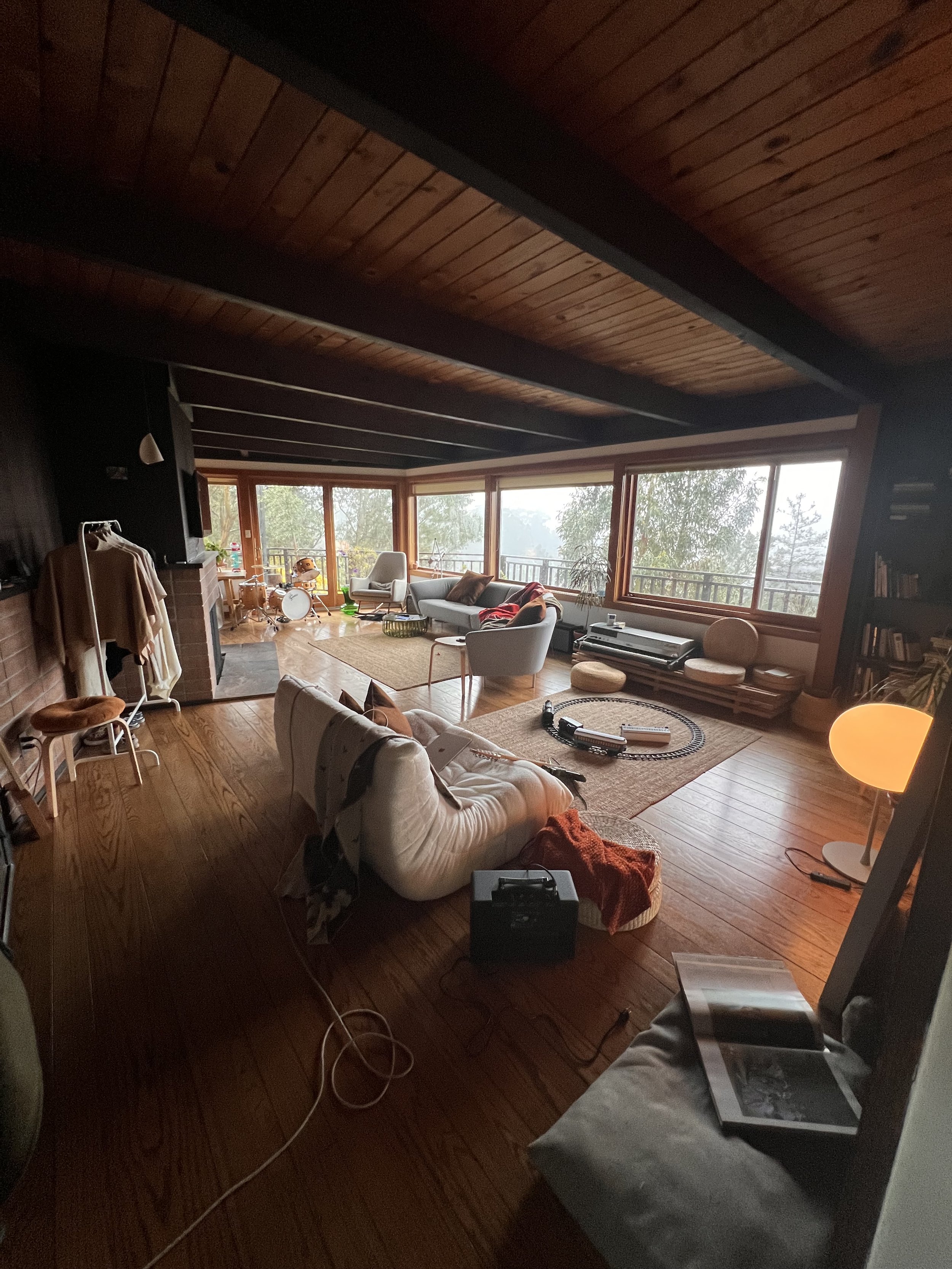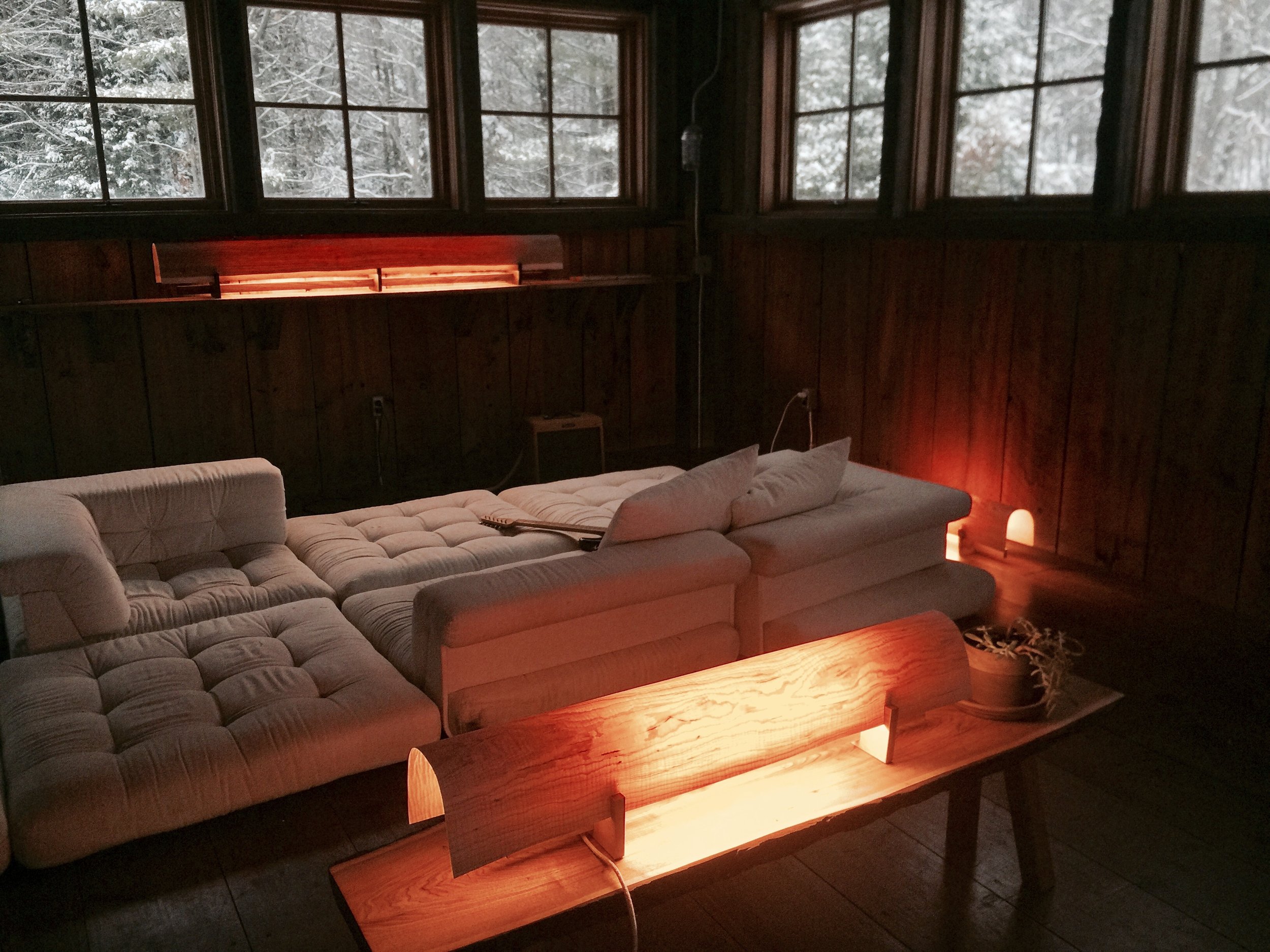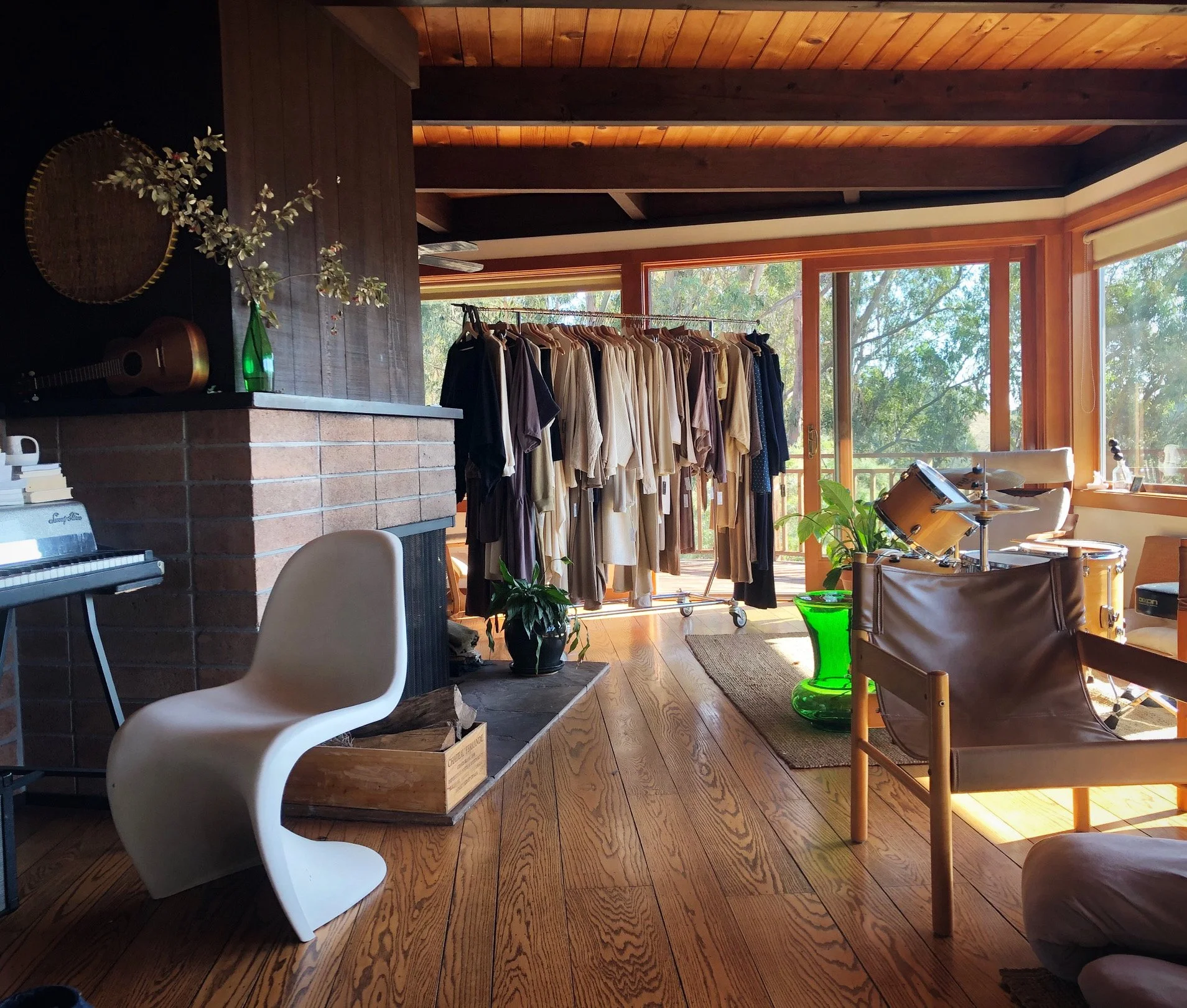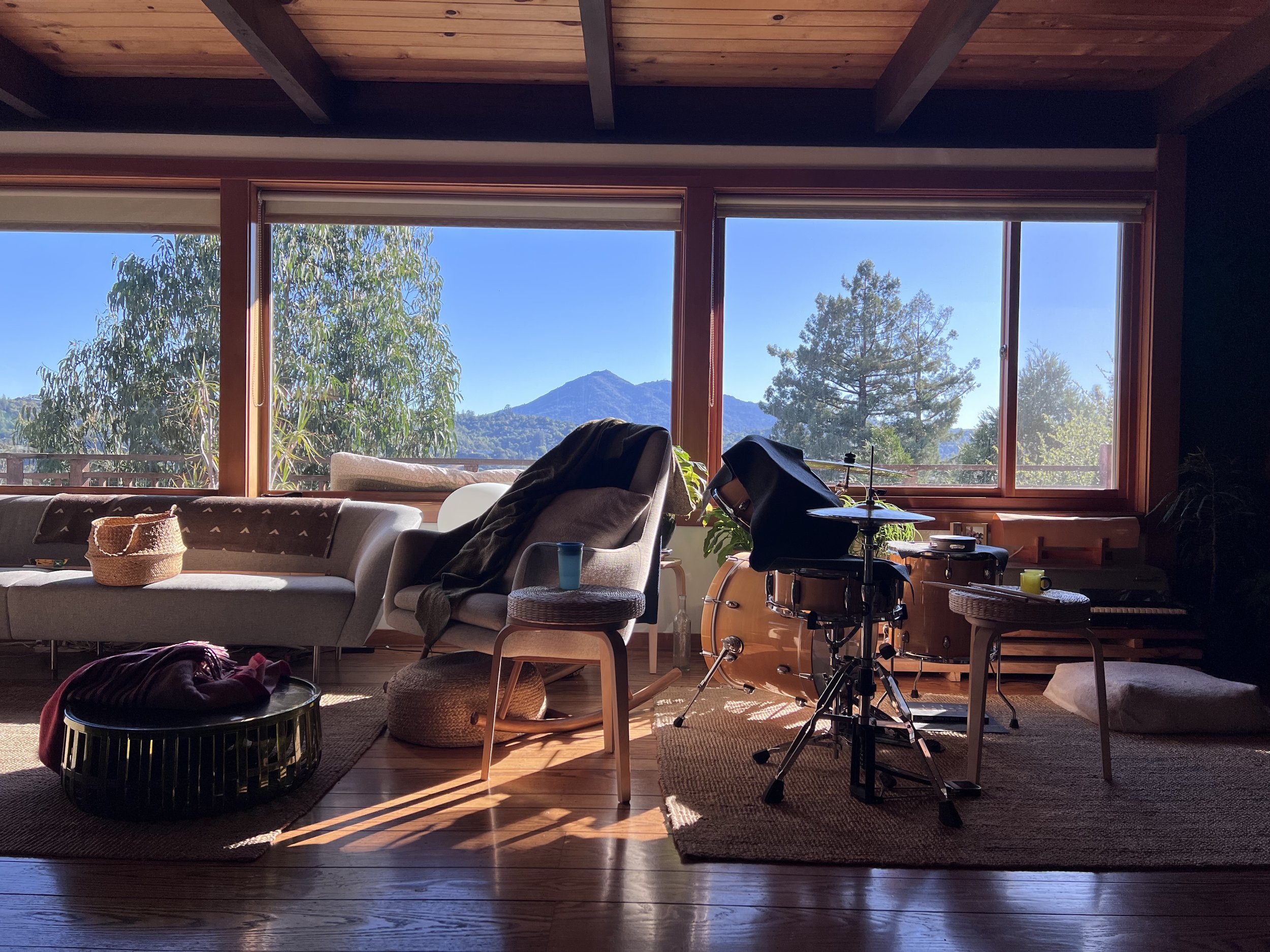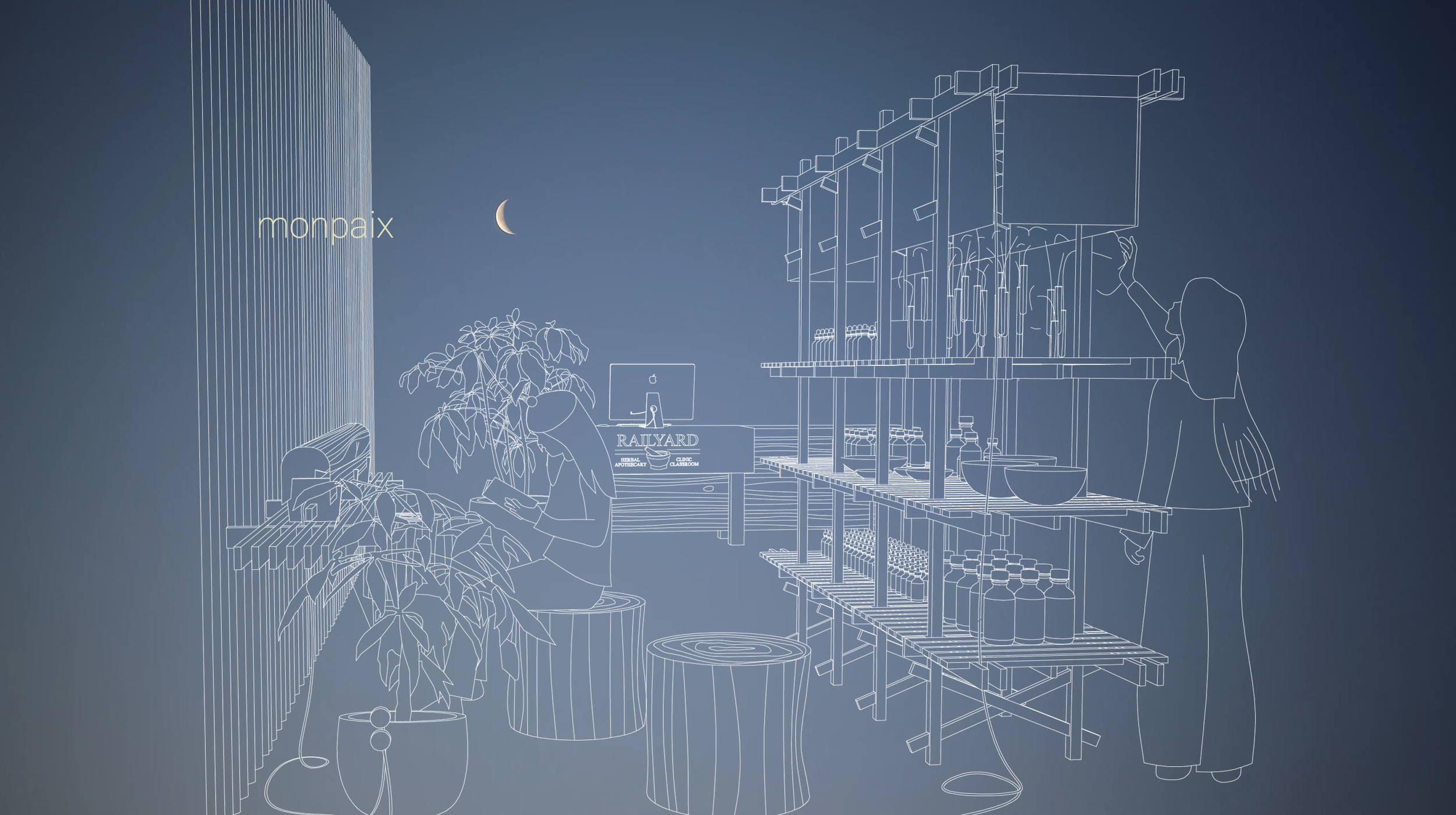
My approach to interiors starts with the same question I bring to clothing: what is this space doing to the person who lives, works, or moves through it? I'm drawn to objects and atmospheres that work quietly — that use light, material, and proportion to orient the body and slow the nervous system down. When I design and build interiors, that's the brief I'm working from: not how a room looks, but how it feels to inhabit it, hour by hour, across the rhythm of a day. The pieces I select and the spaces I compose aren't decorative in the conventional sense. They carry an intention. Good design, like good dressing, is infrastructure for the self — it holds you without announcing itself.
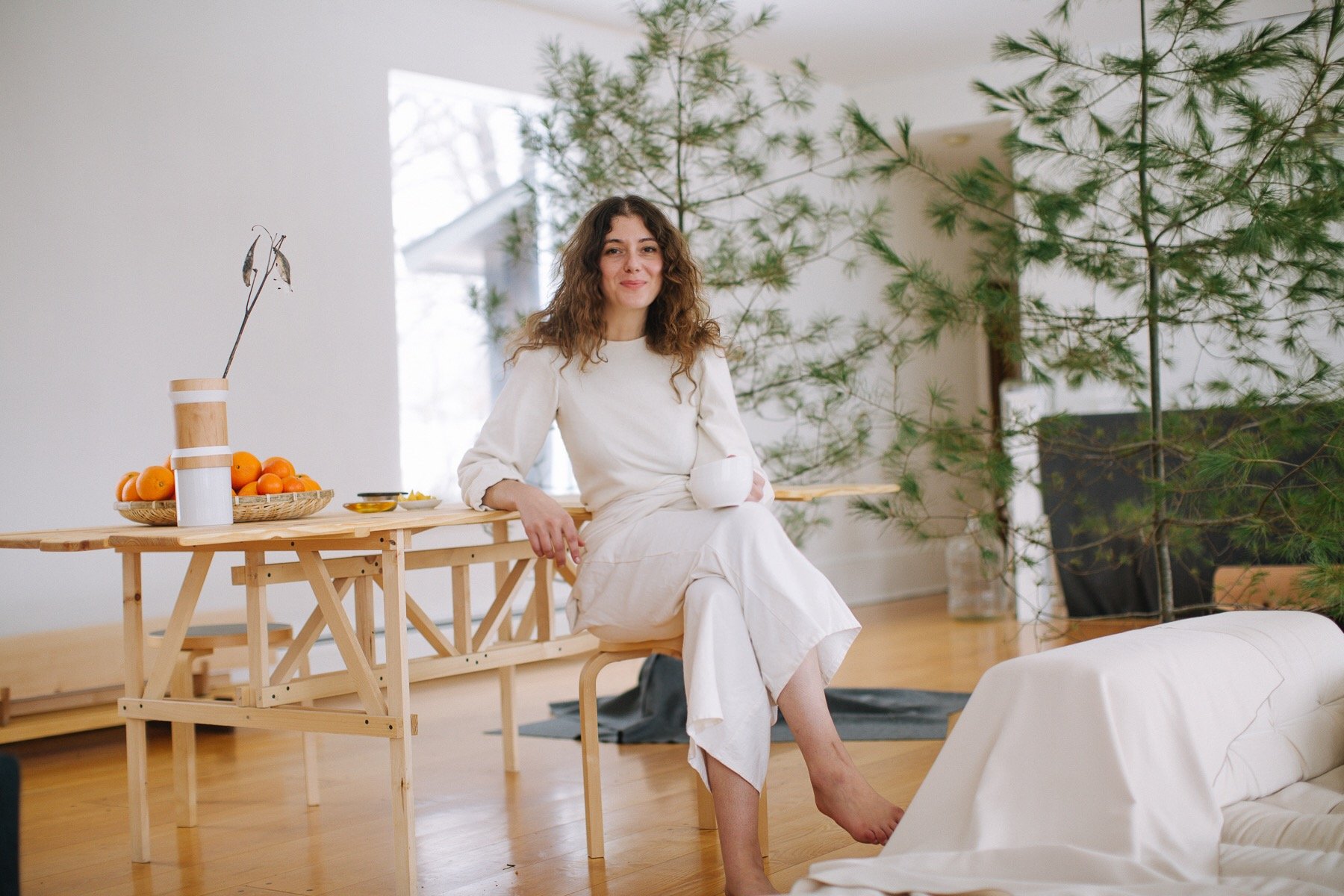
Sourcing objects for a home is something I approach with the same care I bring to everything else — attentive to craftsmanship, material origin, and the hands that made it. My time as an interior designer at Luminaire deepened my knowledge of European atelier furniture: pieces built with the understanding that a well-lived-in home requires objects that only get better with use. I'm equally comfortable working within real-world budgets — finding quality vintage and second-hand pieces that hold their character and their value long after they arrive in a space.
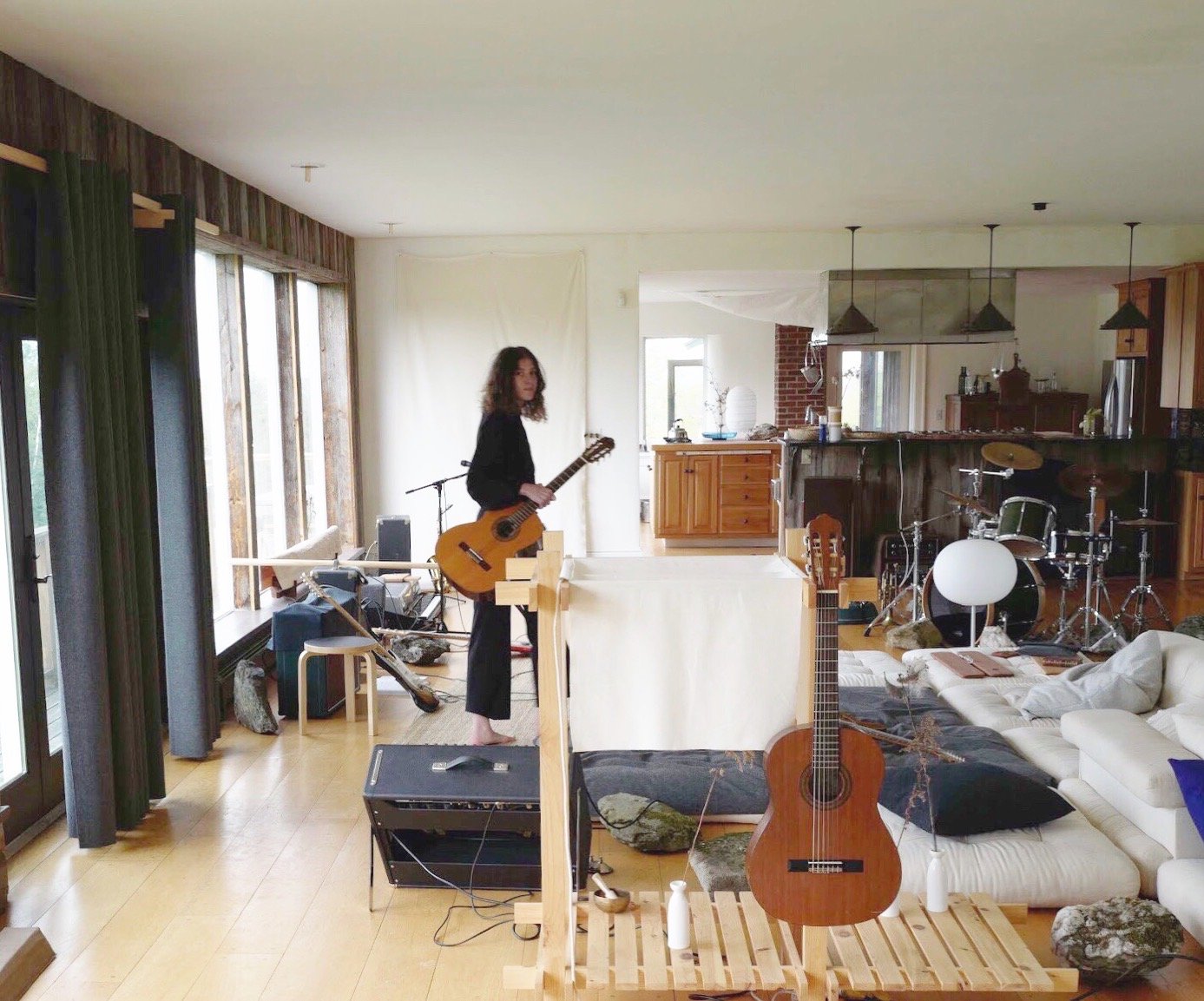
I'm less interested in how a space looks to a guest than in how it works for the person who wakes up in it every day. Like Neutra, I believe in biorealism: that environment shapes us at a level deeper than aesthetics — physiologically, behaviorally, over time. So before I make any design decisions, I ask my clients how they want to live, and who they're trying to become. That second question matters. Becoming who you want to be doesn't happen through admiration — it happens through proximity and repetition. It happens because the guitar is in the center of the room, not the corner, so you reach for it before you reach for the remote. Good design doesn't just reflect a life. It quietly insists on one.
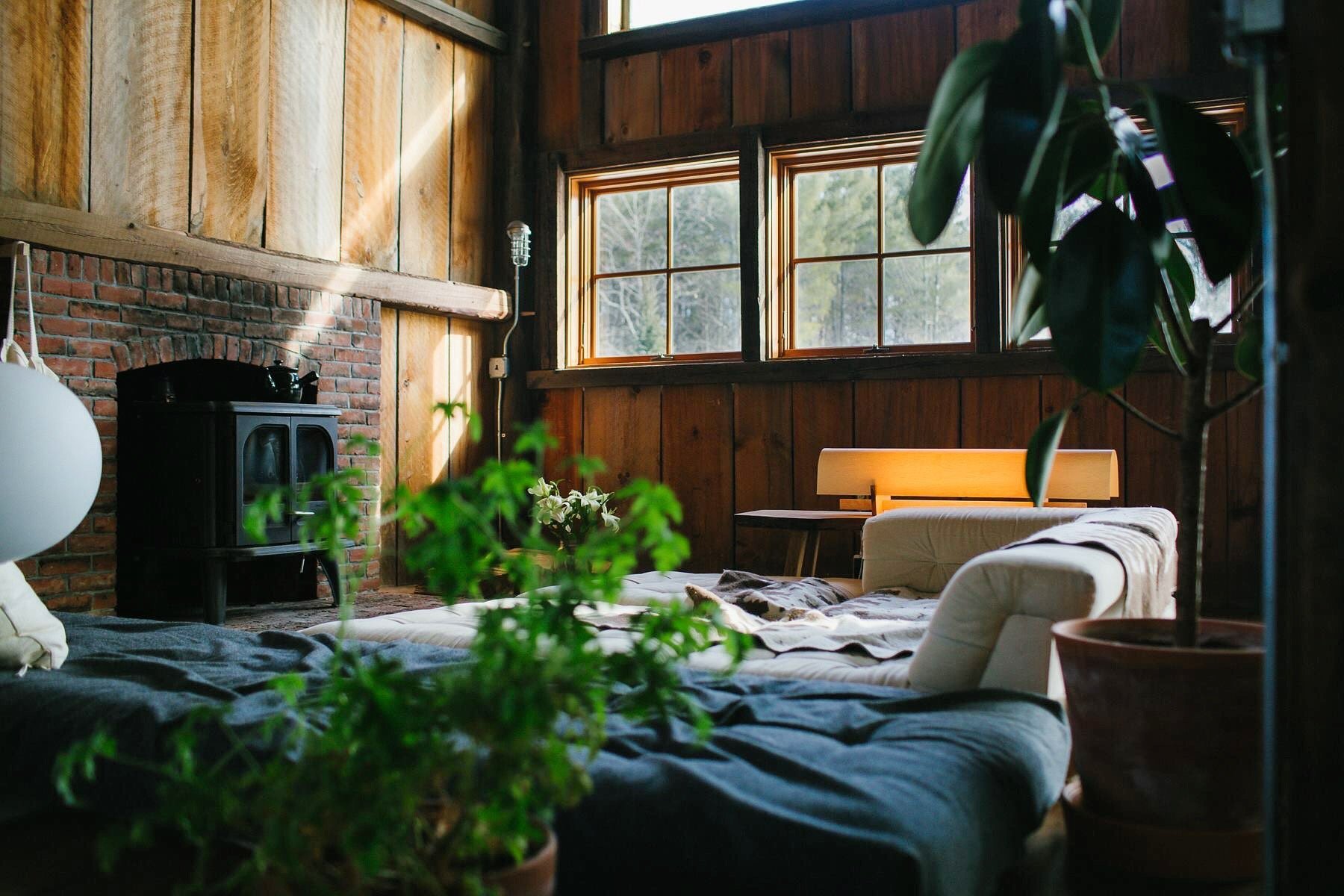
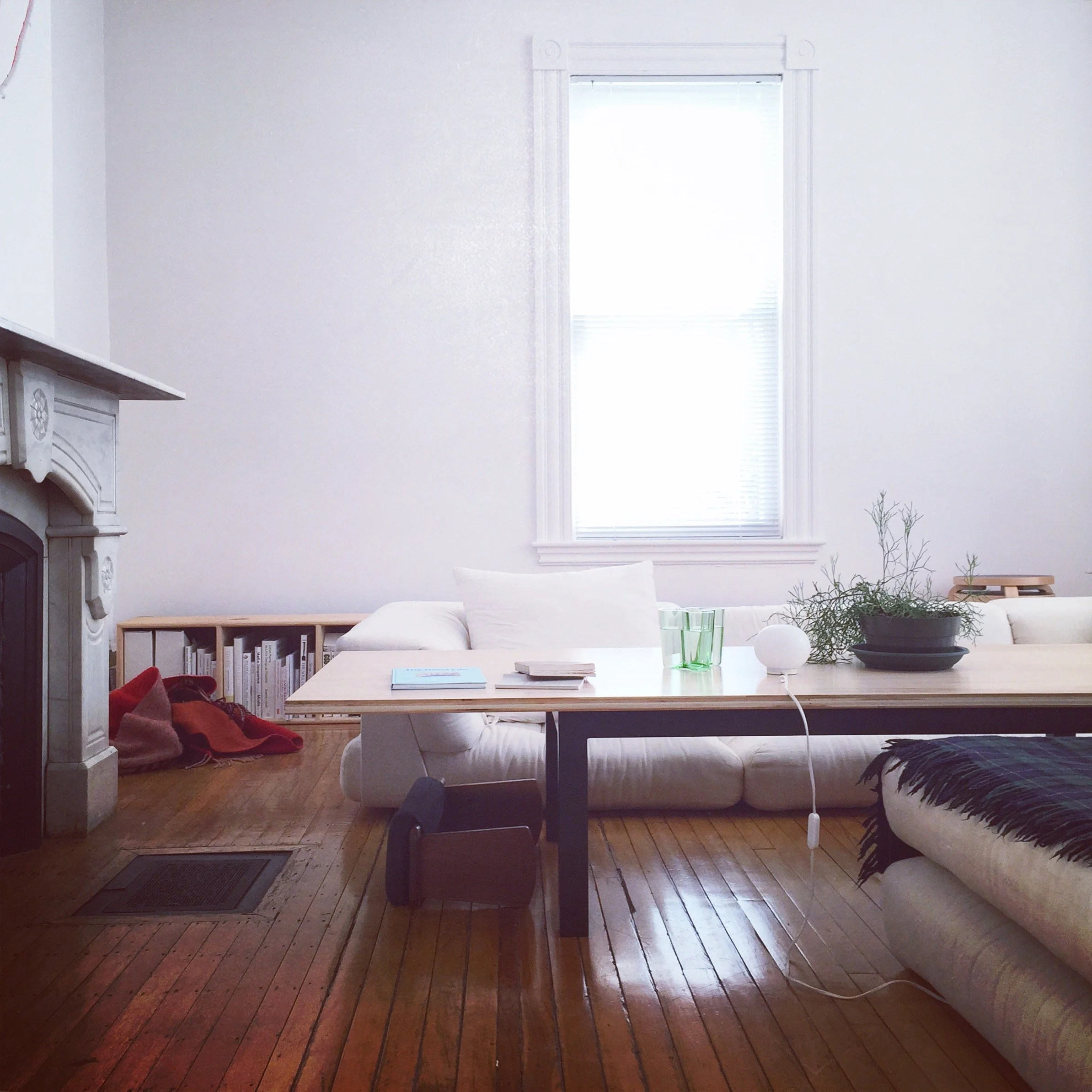
Lighting is one of the details I feel most strongly about. In my own home I have everything from Jasper Morrison's Glo-Balls to Luxo lamps — a range that reflects what I believe good lighting requires: atmosphere and utility, held in balance. I think about light the way I think about everything else in a space — not as a feature, but as a condition. It shapes how a room feels at six in the morning differently than at ten at night. My approach pairs intimate, atmospheric light with the pragmatic, task-driven light that a real working life actually needs. Neither at the expense of the other.
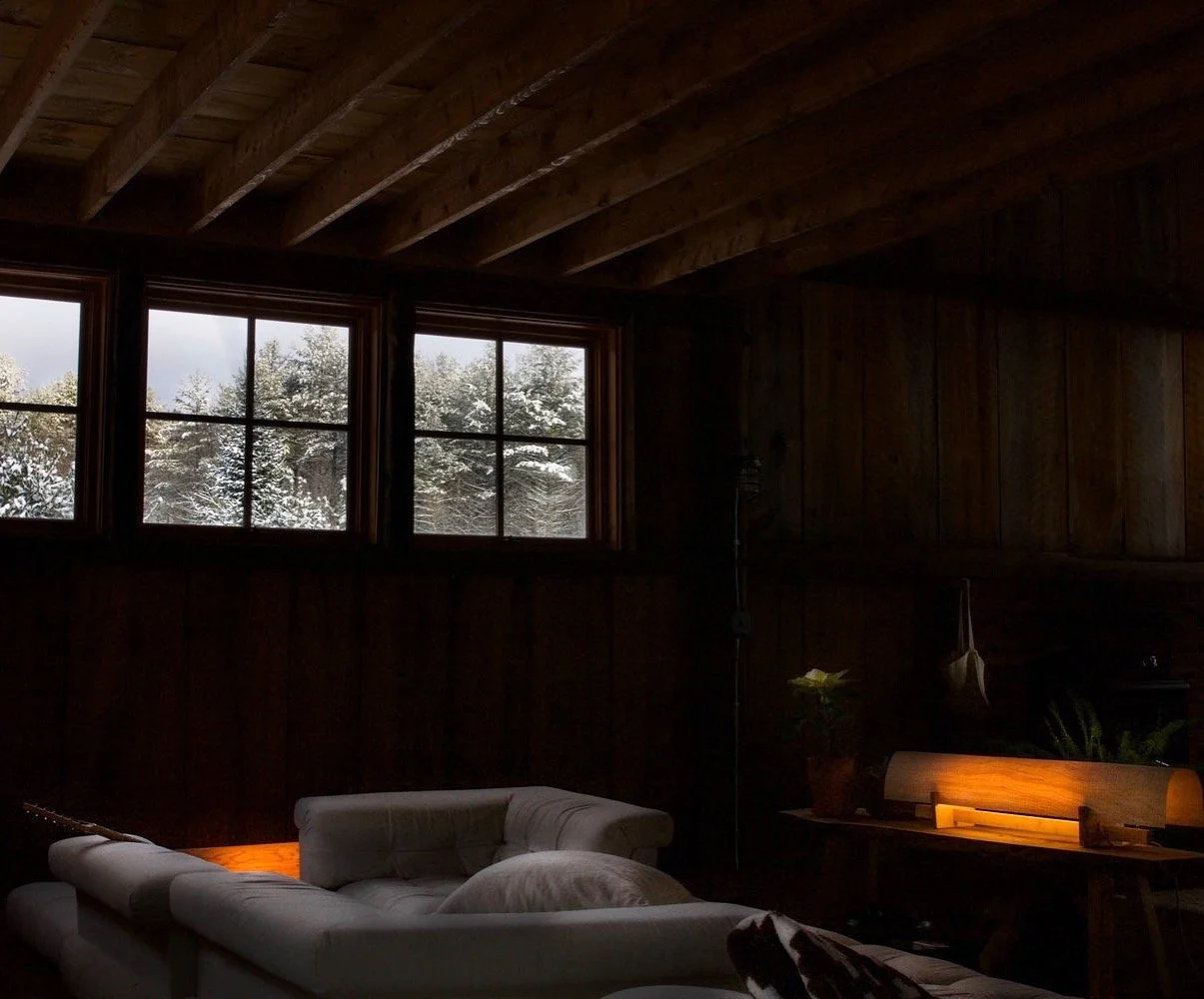
I've lived across a real range of environments — dense urban neighborhoods and open rural land — and what I've carried from all of them is a conviction that nature belongs inside, regardless of what's outside. Plants, wool, real wood — these aren't stylistic choices so much as biological ones. We are organisms, and our homes should reflect that. The spaces I find most alive are those that hold nature and technology in productive tension: where a screen doesn't dominate a room, where materials breathe, where something is always growing. A home that supports the whole person has to engage the whole body — not just the eye.
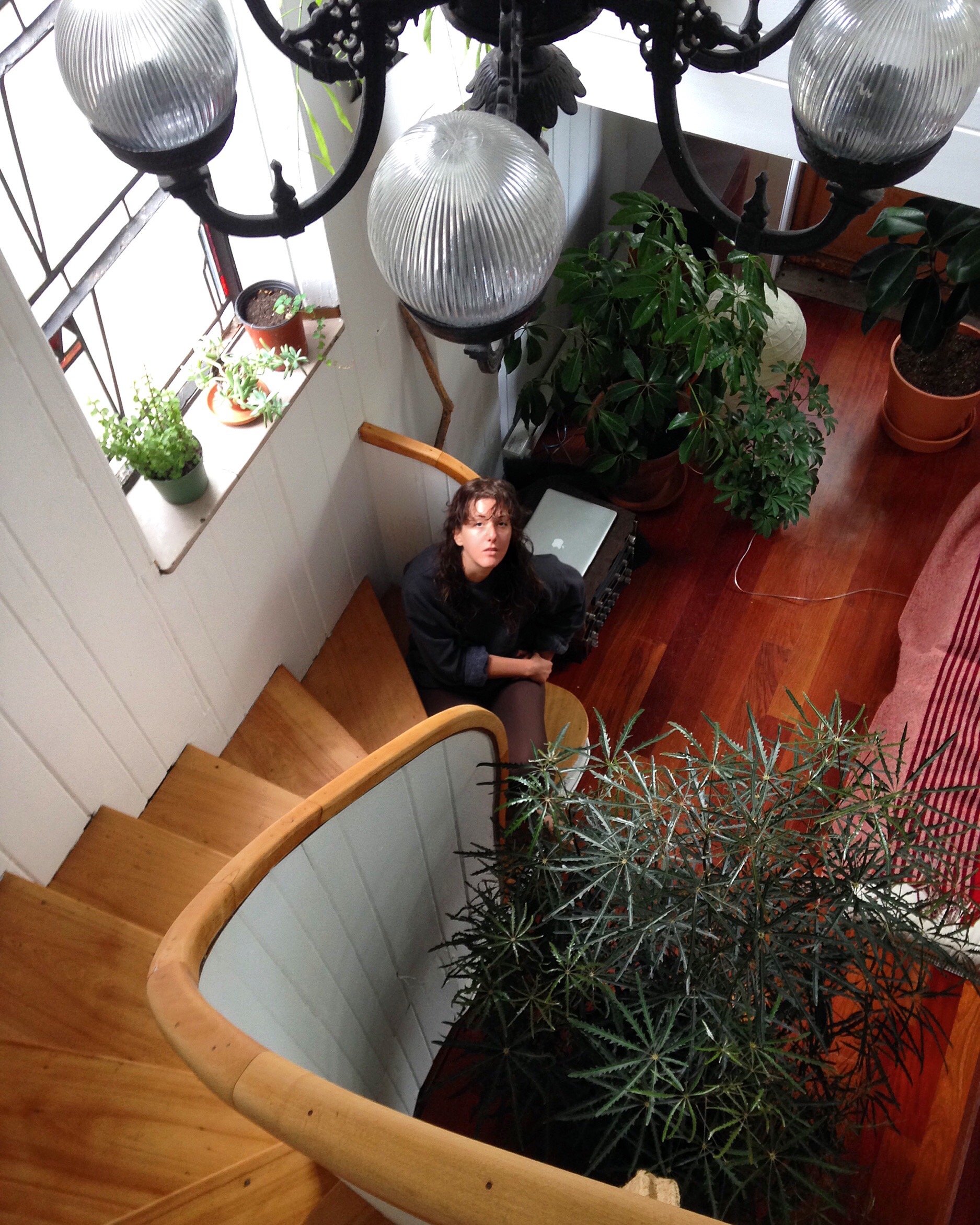
As a mother, I've spent a lot of time in other families' homes — and I've developed a strong sense of what it actually takes to design a space that works for children without surrendering to them. I often hear parents say they don't want to invest in their home because the kids will ruin it. But that framing sets up a false choice: that a space can either serve the adults or the children, never both. Good interiors aren't fragile showpieces — they're environments we develop in during our most intimate, formative moments. Children aren't a reason to lower the standard. They're a reason to raise it. I design homes that are honest in their materials, generous in their proportions, and confident enough in their own character that a child's curiosity becomes part of them rather than a threat to them.
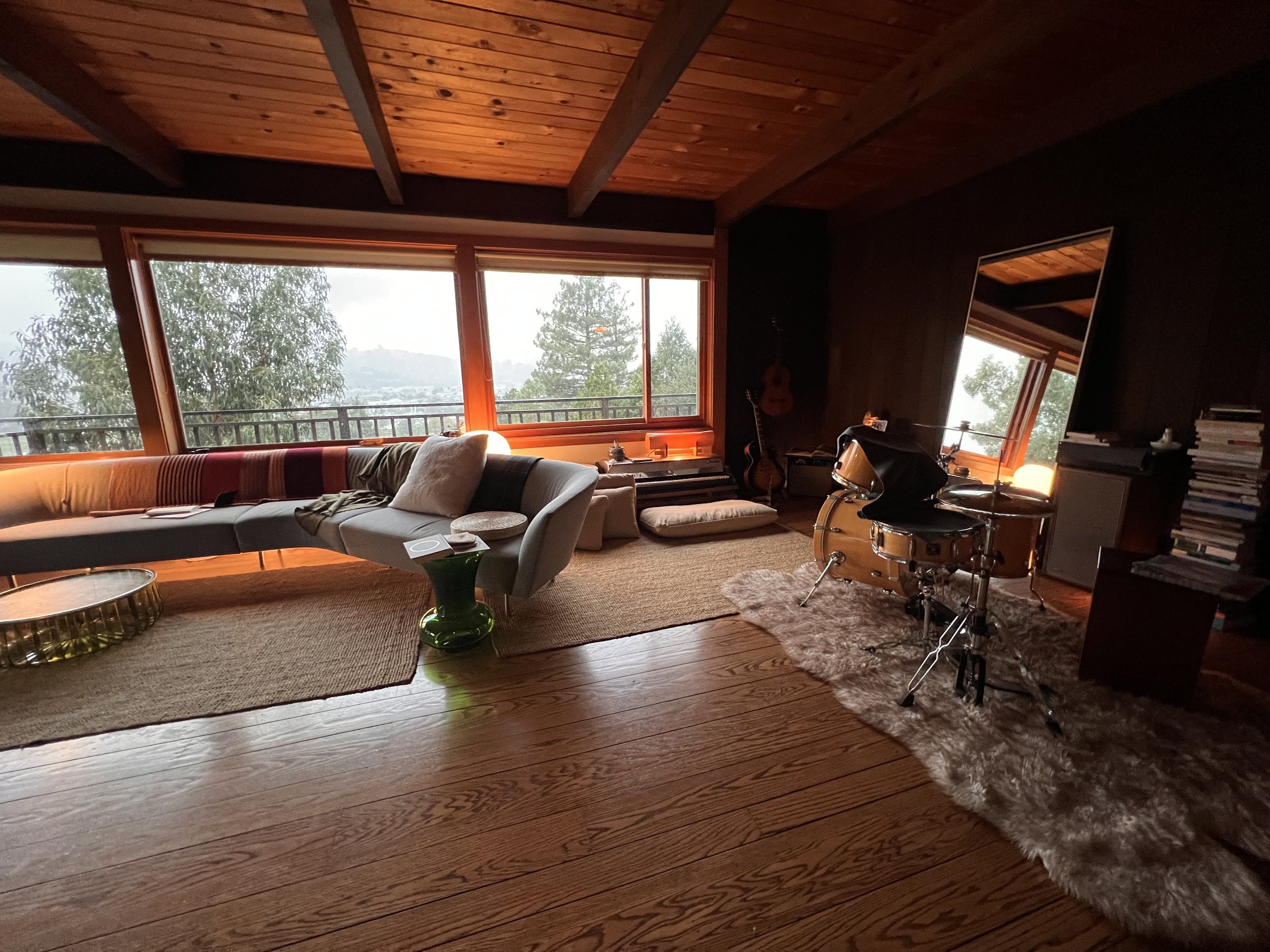
The television should not be the cornerstone of a living room. That sounds simple, but it's a design decision with real consequences — for how we spend our time, how our children develop, and who we're quietly becoming inside the spaces we inhabit every day. I design homes that make it easier to reach for a book than a remote, easier to sit at an instrument than a screen. Not through restriction, but through intention — by giving reading, art, and music the central, dignified place they deserve. A home is not where you display your taste. It's where you shape your character. It's not a place to show that you understand good design — it's a place to benefit from it.
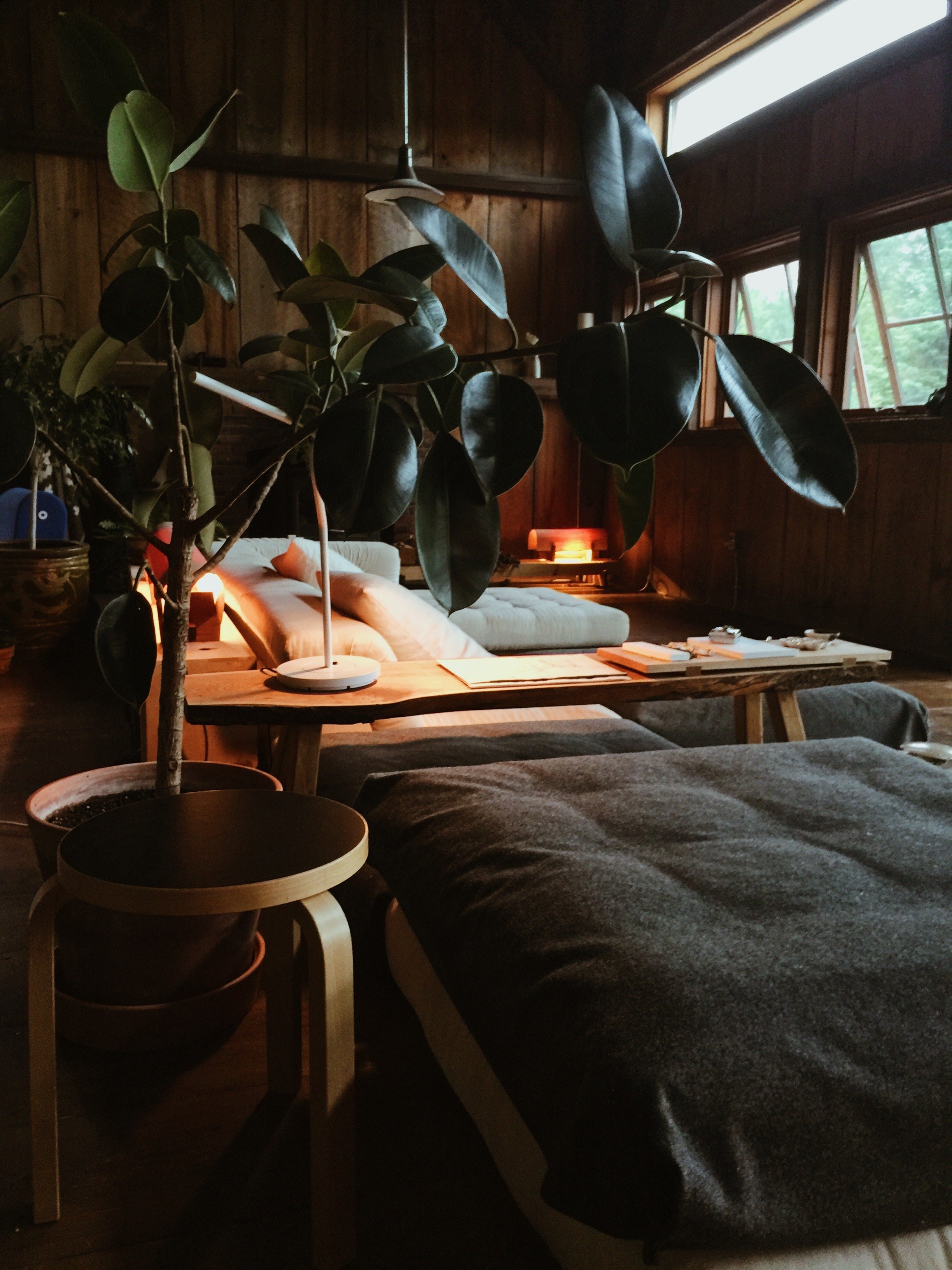
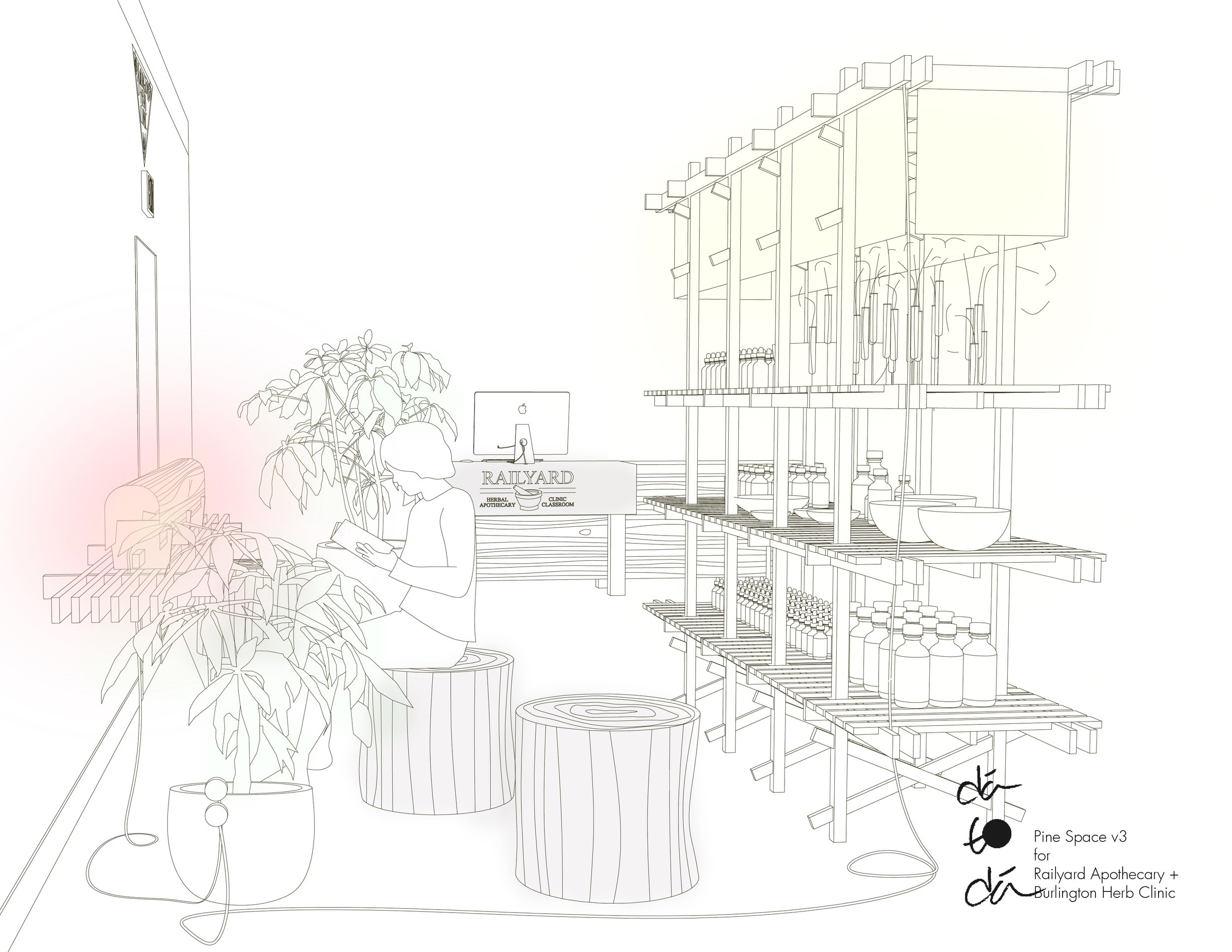
Though my focus has been largely residential, I've always moved between scales. As a clothing designer, shaping the environment my work is seen in has been part of the practice from the beginning — retail space as an extension of the garment, the atmosphere continuous with the object. I've concepted and designed commercial interiors with that same philosophy, and I'm currently working on a yoga studio in Marin and a retail shop in San Francisco. If you'd like to work together, I'd love to hear about your space.
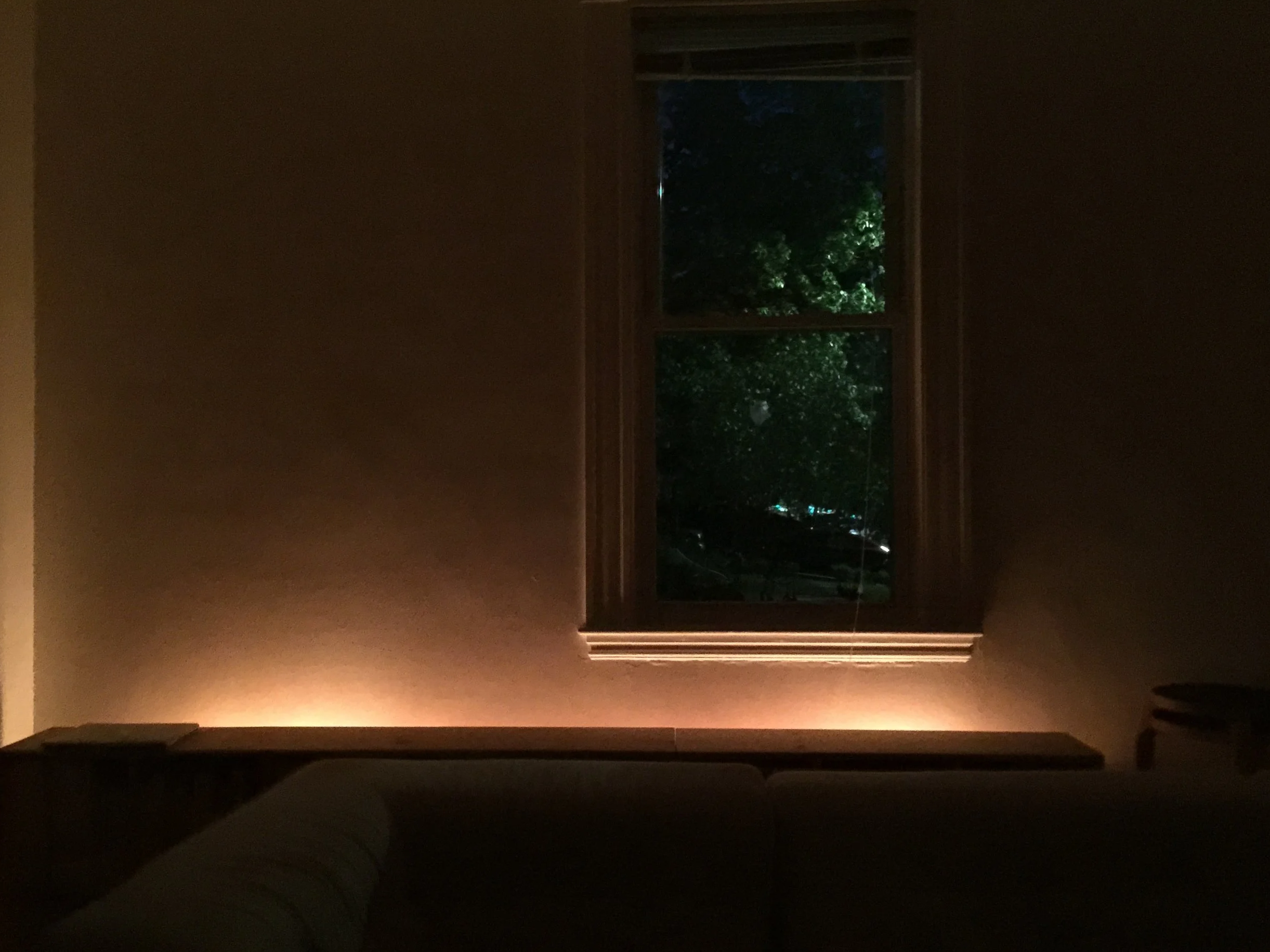
Retail environments too often work against the very thing they're trying to do. Bright, pressured, arranged for conversion — they put people on guard rather than at ease. My approach is different. I design commercial spaces as places of reprieve: unhurried, atmospheric, with a logic that invites exploration rather than directs it. When people feel genuinely comfortable in a space, they stop performing the role of shopper and start relating — to the objects, to the environment, to themselves. That's when real connection to a brand happens. Not through persuasion, but through the quality of the experience of simply being there.
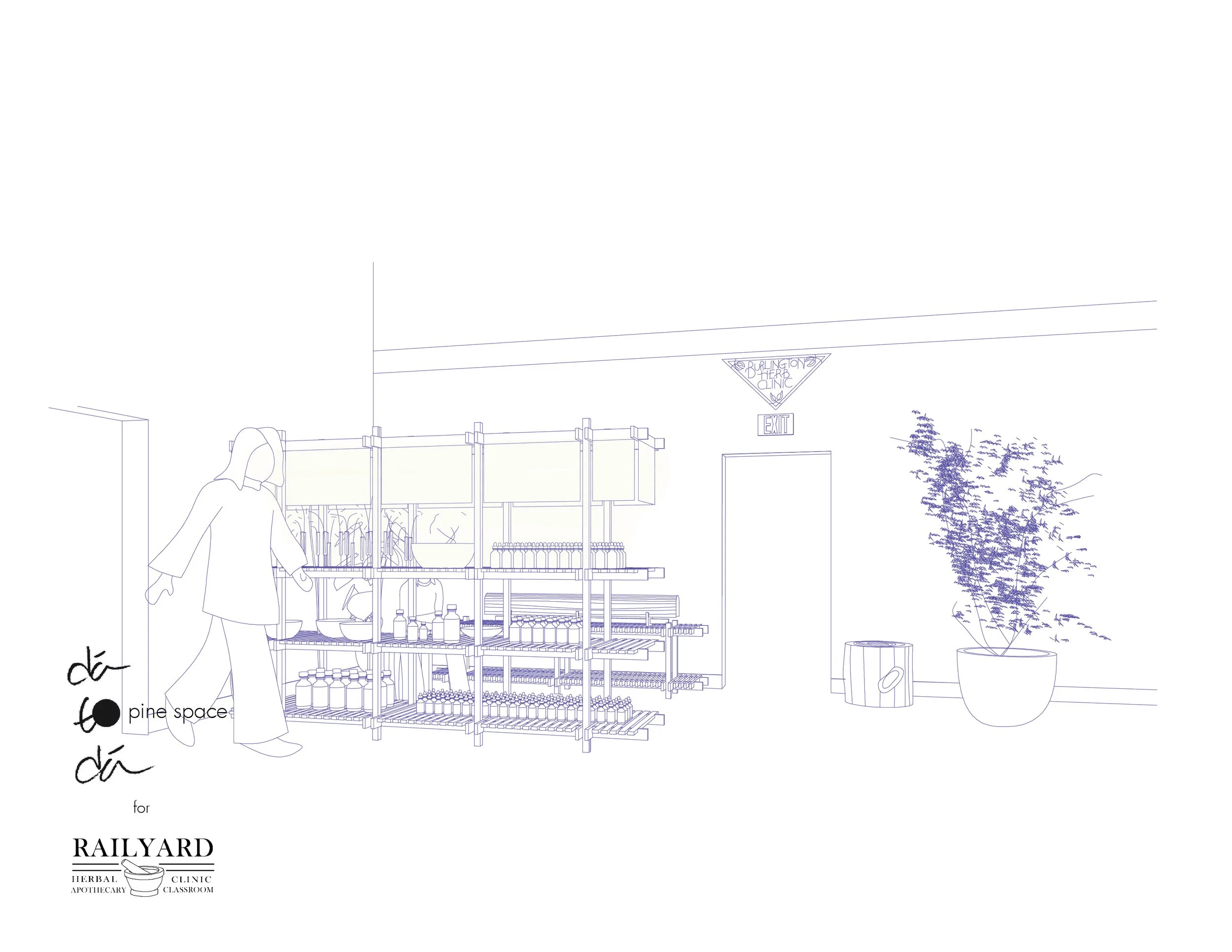
A studio is the most honest room a person can have. It doesn't need to impress anyone — it needs to work, and it needs to sustain the particular kind of focus and energy that making demands. I design studio spaces for artists and designers with that as the brief: how does this room need to feel at nine in the morning when the work is hard, and at midnight when it's going well? That means getting the light right, the storage invisible, the surfaces durable, and the atmosphere conducive to the long, uninterrupted stretches that creative work actually requires. But it also means understanding the person — their process, their rituals, the conditions under which they do their best thinking. A well-designed studio doesn't just house a practice. It quietly deepens it.
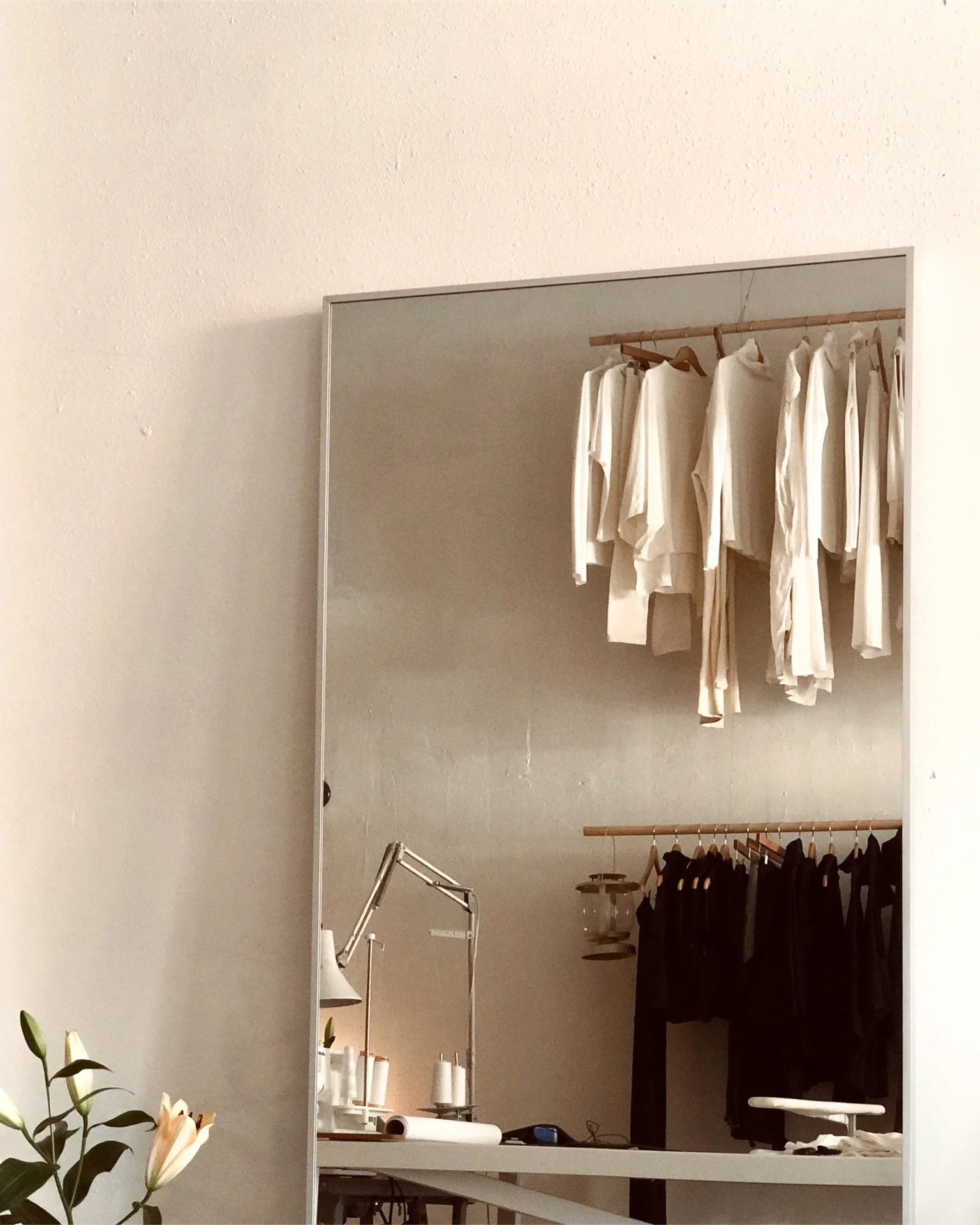
Music spaces require a different kind of thinking — one that starts with sound, but doesn't end there. I design rooms for musical work with the same attention to atmosphere and inhabitation I bring to every space, but with an added layer: how does the physical arrangement of the room shape the act of playing, recording, and listening? That includes the technical — acoustics, absorption, isolation — but also the poetic. Where a microphone lives in a room is not just a functional question. A stand can be a sculptural object, positioned with intention, integrated into the environment rather than tolerated as equipment. I'm interested in musical spaces that feel as considered and alive as the work made in them — where the room itself becomes part of the instrument.
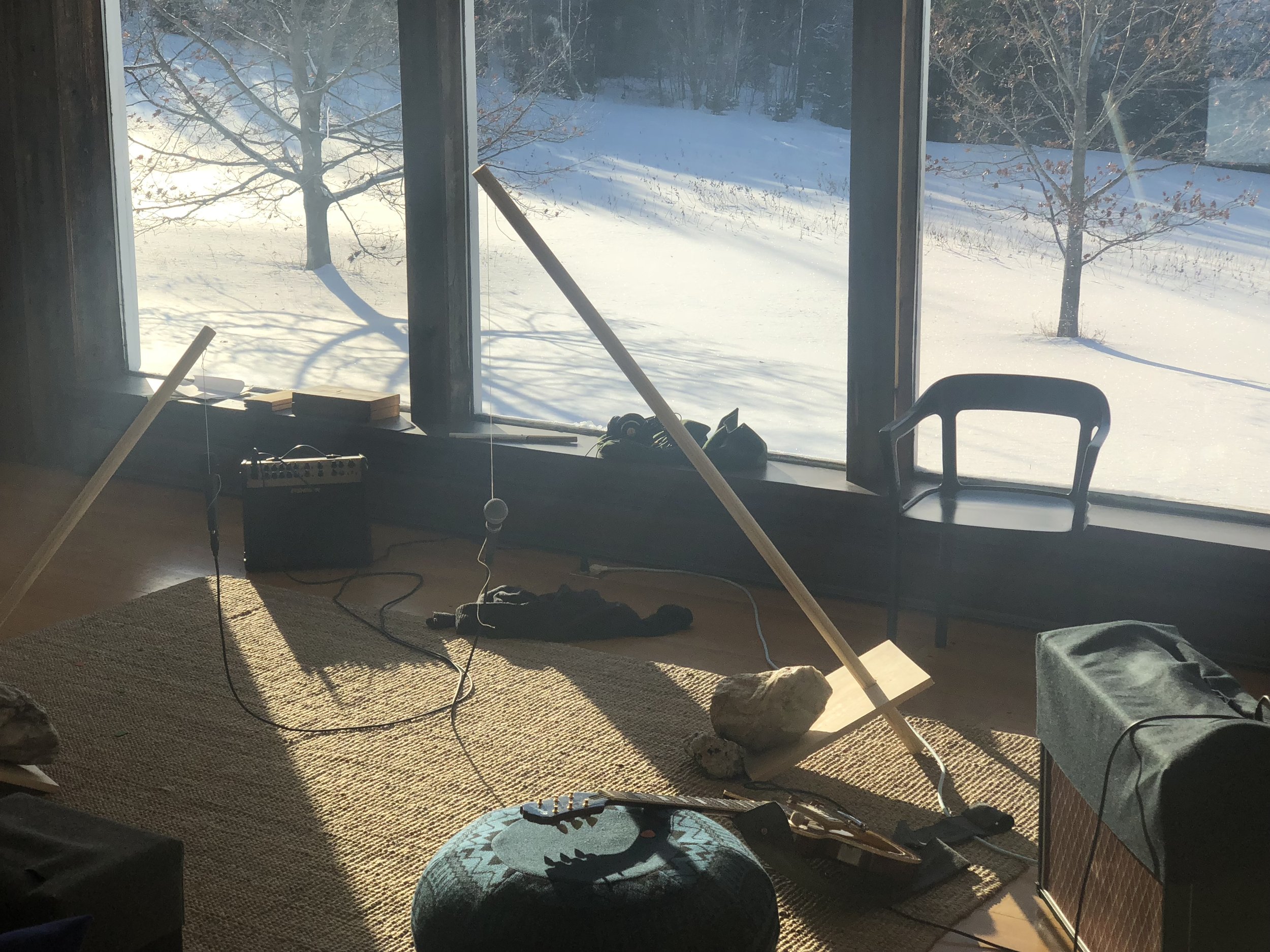
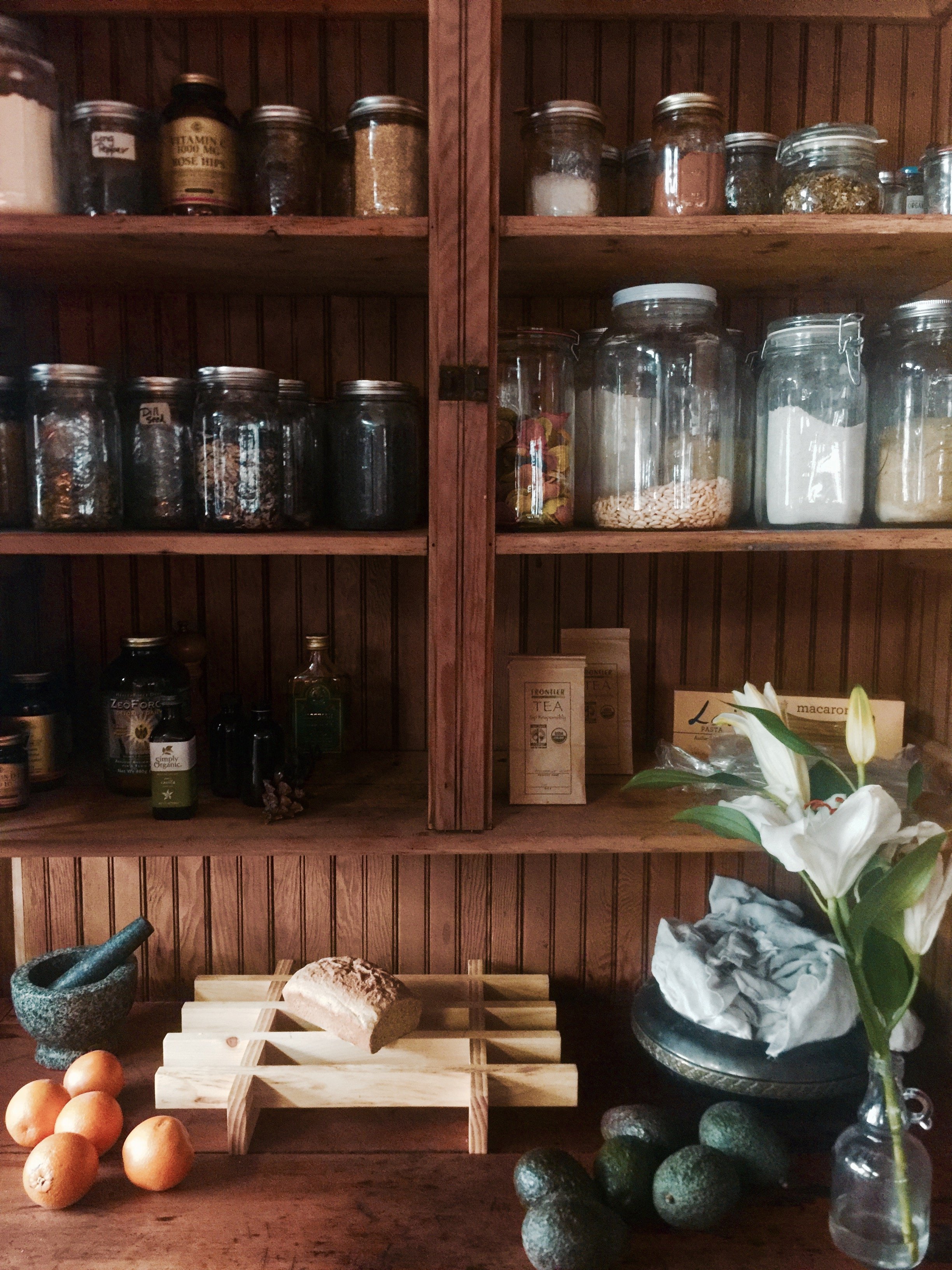
My approach to interiors starts with natural, durable materials and an organization philosophy that works from the inside out. This isn't about performative minimalism — it's about building an environment around how you genuinely live. Food visible in cupboards, not hidden behind advertising. Objects chosen because they mean something. A home that reflects priorities rather than accumulation.
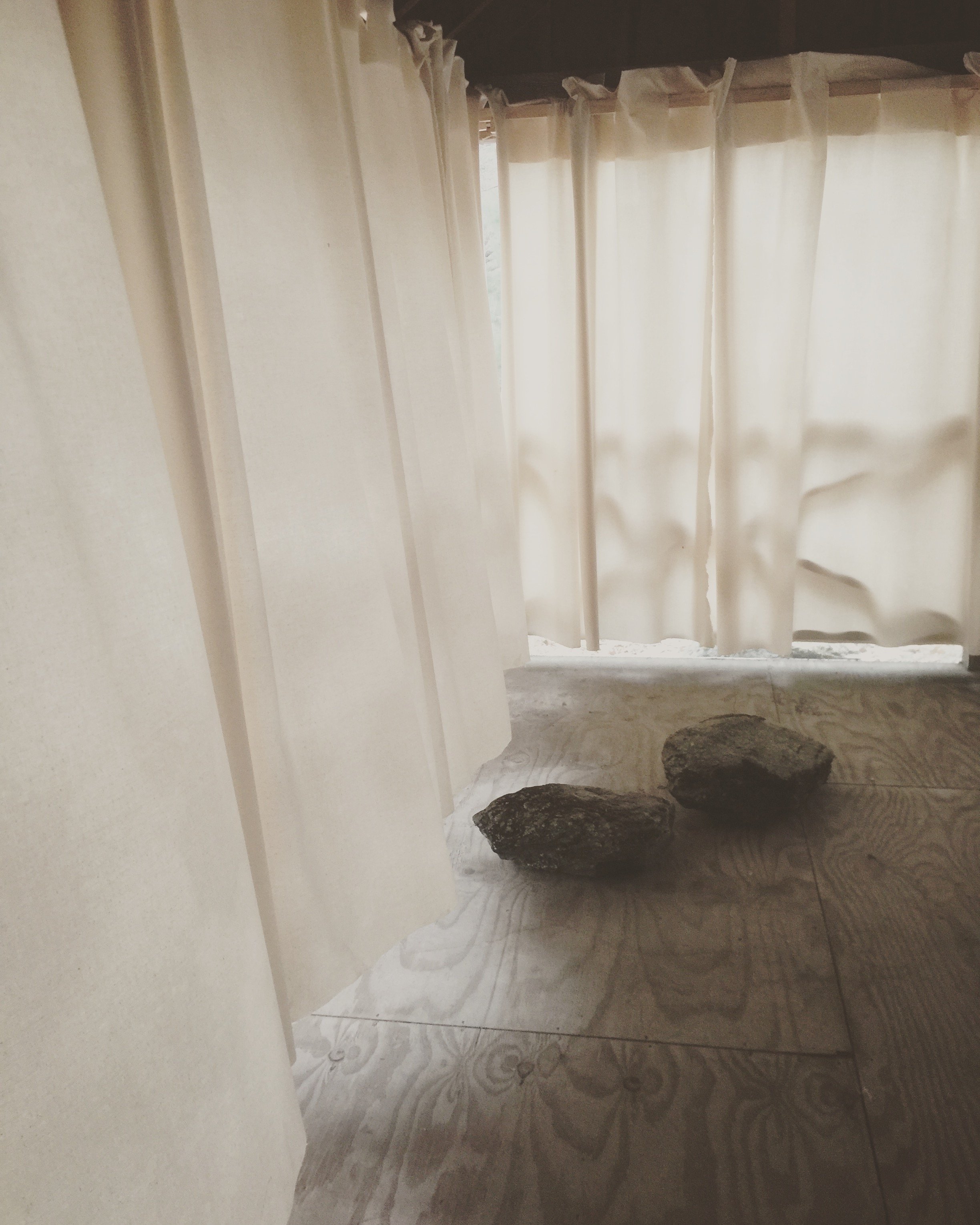
There is also something I find generative about space itself. A room already filled with objects feels finished — static, declared. I'm more interested in interiors that remain open: in process, alive to how the people inside them are still creating and becoming. Minimalism, for me, is less an aesthetic than a condition for that kind of ongoing life.